
20/02/2026
Antarctica: the PNRA Winter Research Campaign Gets Under Way
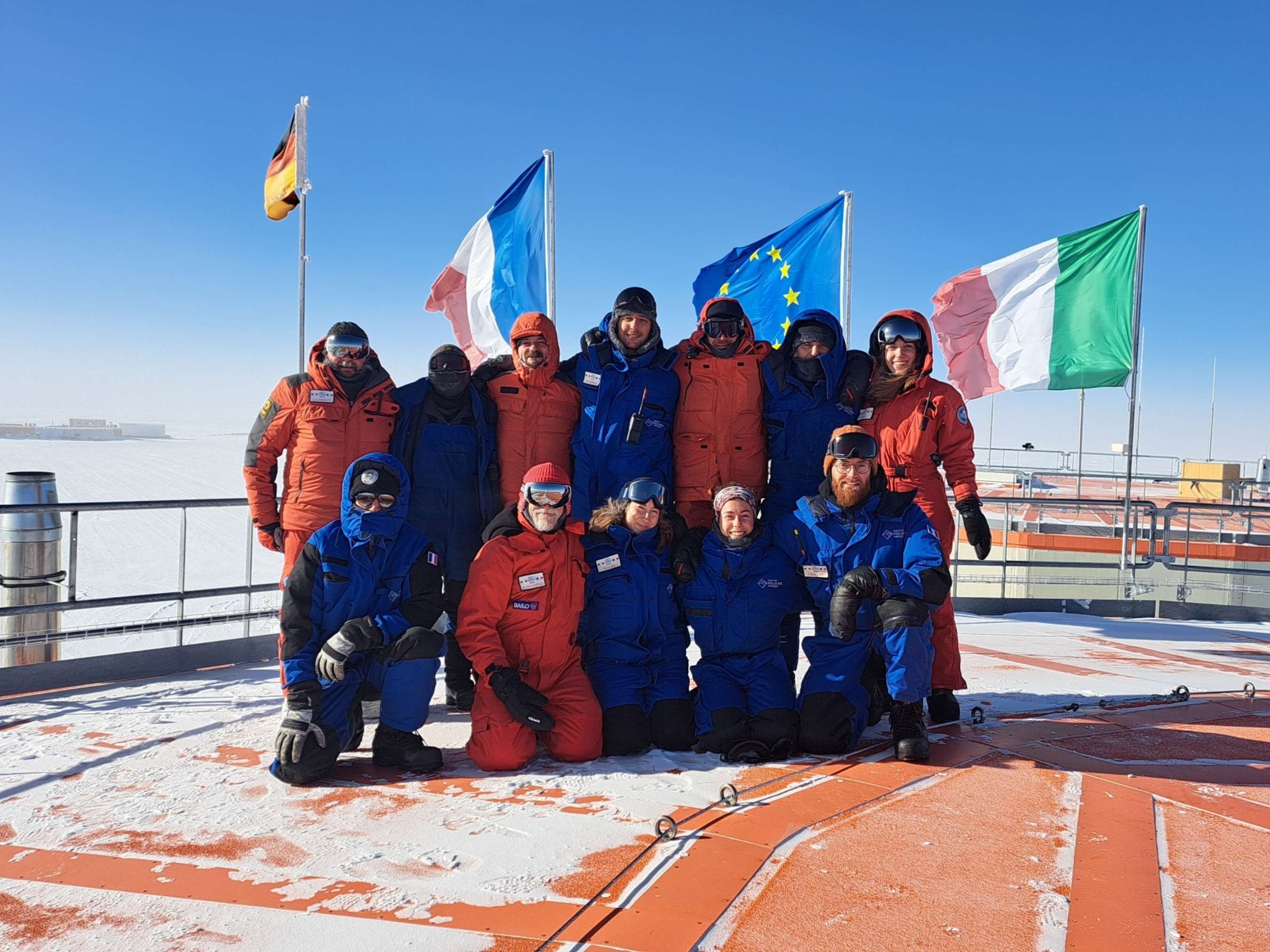
The 22° winter mission of the National Antarctic Research Program (PNRA) has officially started at Dome C, the Italian-French Concordia station in Antarctica. The programme is funded by the Italian Ministry of University and Research (MUR) and it is implemented by the National Research Council (CNR) for scientific coordination, by the Italian National Agency for New Technologies, Energy and Sustainable Economic Development (ENEA) for the planning and logistical organisation of activities at the Antarctic stations, and by the National Institute of Oceanography and Applied Geophysics (OGS) for the technical and scientific management of the research vessel Laura Bassi.
The expedition is led by station leader Gabriele Carugati (University of Insubria). This year, the programme's resident group consists of 12 members: five Italians from the PNRA, six French researchers from the French Polar Institute Paul-Émile Victor (IPEV) and one researcher from the European Space Agency (ESA).
The team will spend nine months in isolation at an altitude of over 3,000 metres. Conditions will be very harsh, with three months of complete darkness and temperatures down to -80°C. The team will carry out station-maintenance work as well as 21 scientific activities across different disciplines. In addition, seven biomedical projects coordinated by ESA are to be conducted to study the effects of an extreme environment – similar to space – on the mission personnel.
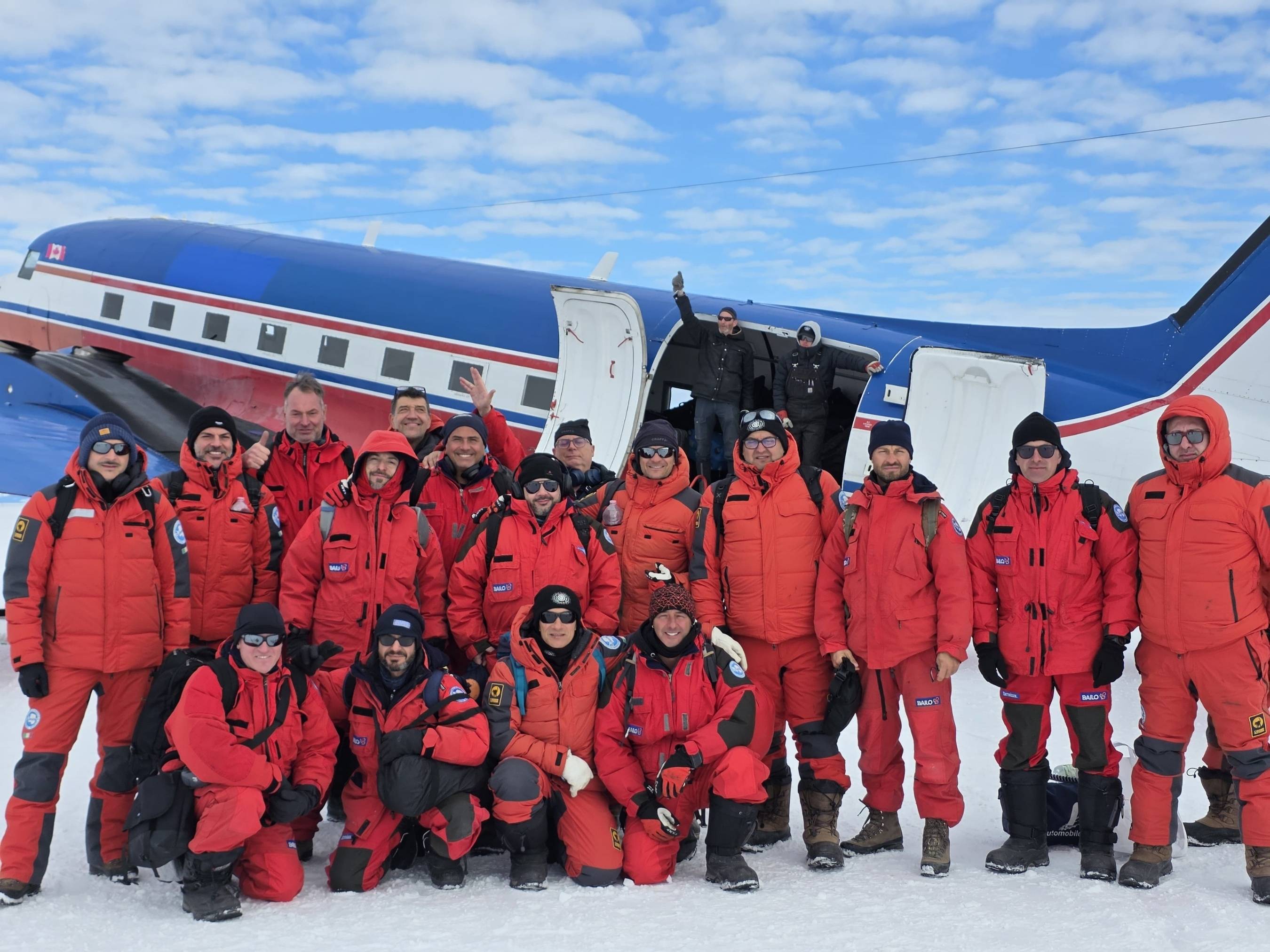
Meanwhile, at the Mario Zucchelli station, the 41st PNRA summer mission is drawing to a close. 14 scientific activities have been implemented, including projects and permanent observatories in climatology, seismology, geodesy, geomagnetism, upper atmosphere and solar activity, volcanism, changes in microbial communities, permafrost and vegetation.
Nearly 170 people have been involved in these research projects, including researchers and technical staff, as well as 20 military specialists from the Italian Army, Navy, Air Force and Carabinieri, and three firefighters.
The 41st expedition has also demanded significant logistical effort. Key infrastructural projects have been successfully completed at both stations, further consolidating the role of the Italian Antarctic bases as vital hubs for international scientific collaboration, in support of numerous campaigns.
Research activities will now continue on board the icebreaker Laura Bassi until next March, involving around 30 researchers and technicians, in addition to the ship's crew, for the implementation of five research projects.
In addition, from November to January, the fifth and final campaign of the Beyond EPICA - Oldest Ice project was conducted at the Little Dome C camp. This campaign focused on two primary objectives: drilling into the bedrock beneath the ice sheet to estimate the last time it was exposed to sunlight, and deviating the existing borehole to extract new ice samples from the deepest and therefore oldest section.
As part of the Ice Memory project, the Ice Memory Sanctuary was also inaugurated at Concordia Station, a specially excavated storage space in the ice that is designed to preserve samples from retreating mountain glaciers from around the world for future generations to study. In the Ice Cave, two ice samples from Mont Blanc and the Grand Combin are already housed. These were recently transported from Trieste to Antarctica aboard the Laura Bassi and subsequently flown to Concordia.
View also