02/09/2026
Critical areas along the Antarctic coast identified as key constraints on sea-level rise projections
The OGS has participated in a new international scientific review, coordinated by the RINGS Action Group of the Scientific Committee on Antarctic Research (SCAR) and supported by the Council of Managers of National Antarctic Programs (COMNAP), which highlights significant gaps in information regarding the bedrock beneath Antarctica's coastal areas. These discrepancies currently represent a significant challenge in terms of enhancing the reliability of future projections of global sea-level rise.
Published in the American Geophysical Union's (AGU) journal Reviews of Geophysics, the study brought together 80 scientists from 17 different countries to synthesise current knowledge of the interactions between ice, ocean, atmosphere and the solid Earth in Antarctica's coastal zone. The study also highlighted key knowledge gaps and confirmed the need to improve observations across the Antarctic continent.
Antarctica's coastal zone comprises more than just the edge of the continent; it is a highly interconnected system where ice grounded on the seafloor meets the ocean, and where even minor changes can have far-reaching consequences.
Satellite observations over recent decades show that Antarctica's mass loss has increased. The most rapid changes are driven by interactions between the ice and the surrounding ocean, as well as by ice flow at the margins of the ice sheet. However, key parameters of coastal areas remain inadequately mapped, partly due to the limitations of satellite observations in revealing bedrock beneath the ice, whereas computer models alone are unable to predict future changes. RINGS is therefore coordinating international efforts to address these gaps in our knowledge of Antarctica's coastal zones.
As it is not feasible for a single country to achieve complete coverage of Antarctica's entire coastal zone independently, international coordination is paramount. More comprehensive international datasets will thus allow for improved projections of future sea-level rise.
Link to the publication: https://agupubs.onlinelibrary.wiley.com/doi/10.1029/2022RG000803
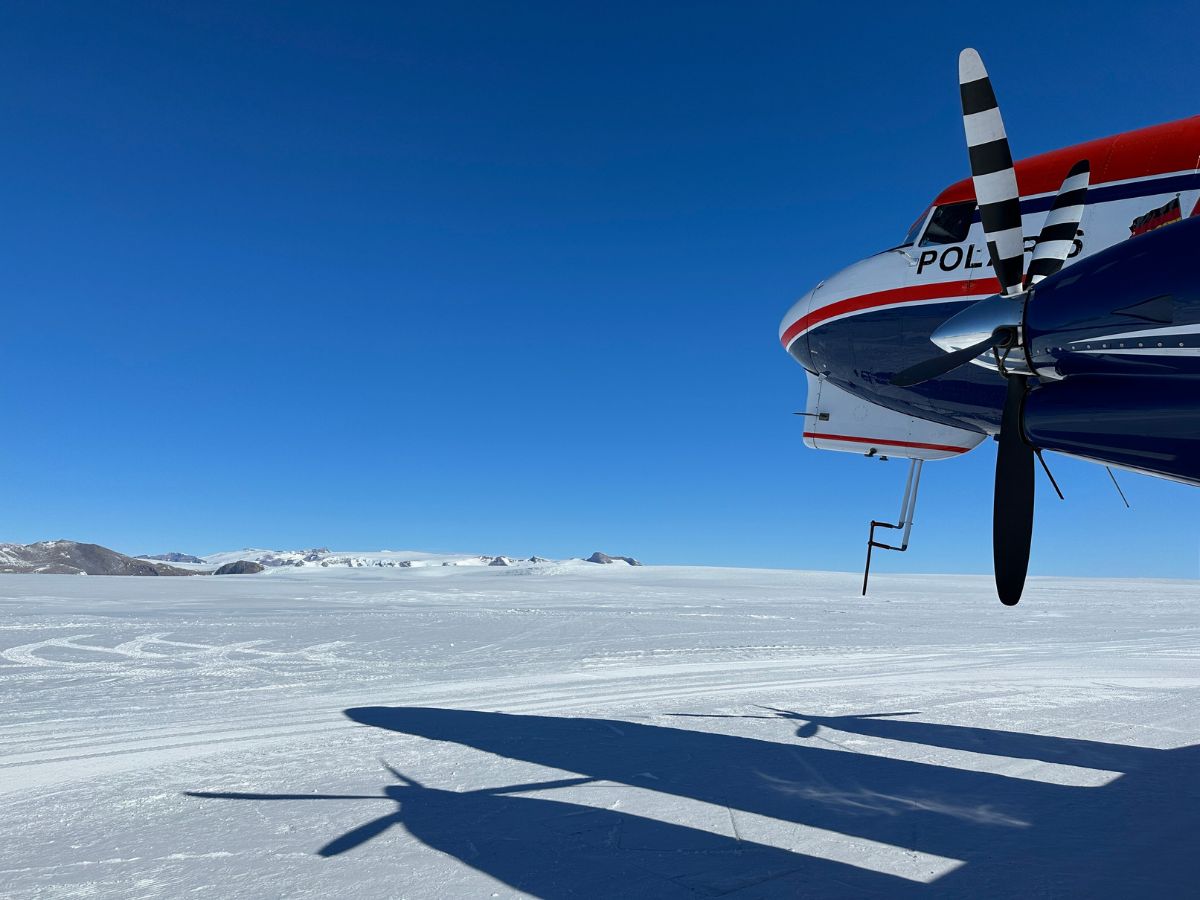
Credits immagine: Kenichi Matsuoka, Norsk Polarinstitutt
View also