
21/07/2026
Gulf of Trieste heating up: peaks exceed 32 °C in the Lagoon
The heatwave affecting the region is also impacting the sea, with peaks exceeding 32 °C recorded in the lagoon. The effects on coastal and lagoon waters are visible to all and are monitored minute by minute by a network of observation systems in the Gulf of Trieste, managed by OGS, including on behalf of the Friuli Venezia Giulia Civil Protection agency.
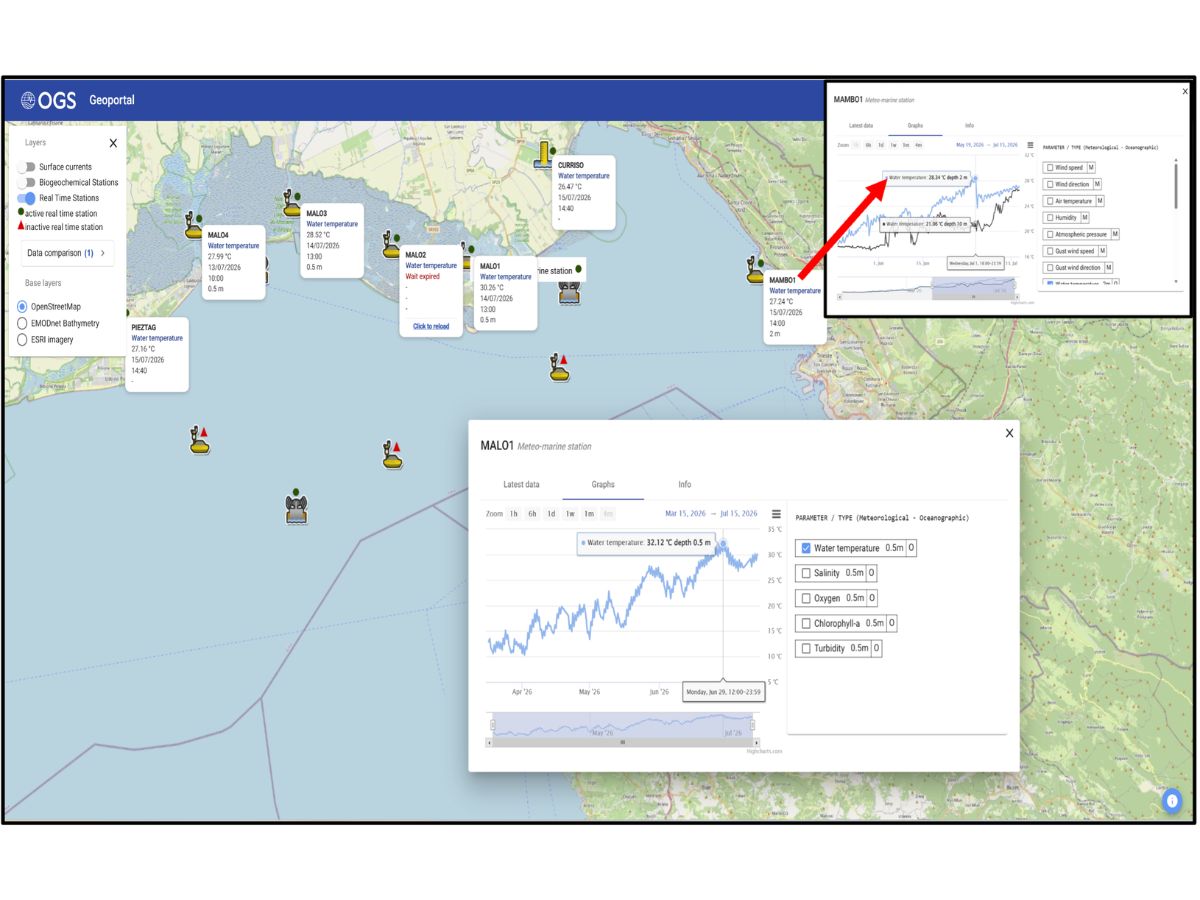
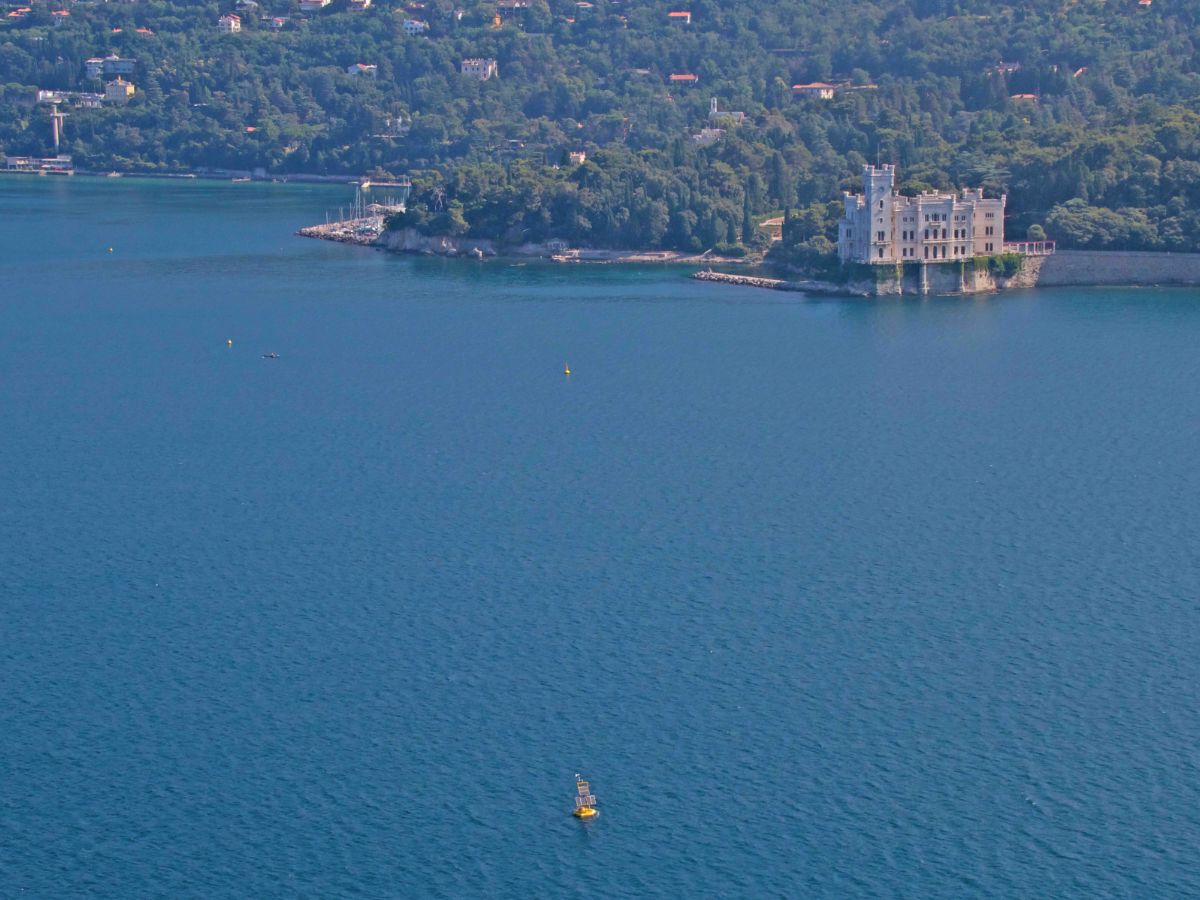
Sensors on the Gulf of Trieste Marine Observatory’s oceanographic buoys have recorded significant temperature peaks. In the lagoon, the highest surface temperature was logged on Monday, 29 June, by the MALO1 buoy, recently installed in the Grado Lagoon, where the water reached 32.12 °C. In open water, the peak occurred at the edge of the Miramare Marine Protected Area, where the long-standing MAMBO1 meteo-oceanographic buoy (operational since 1999) measured a maximum temperature of 28.34 °C on 1 July. Such high temperatures can reduce dissolved oxygen levels, stress marine species adapted to cooler waters, and encourage the spread of species from warmer regions.
Data on the Gulf of Trieste’s waters are freely accessible, allowing scientists and the public to closely monitor the state of the sea and the evolution of marine ecosystems. Available parameters include temperature, salinity, dissolved oxygen, chlorophyll levels and water turbidity. Up-to-date measurements can be freely accessed via our Marine Data Geoportal.
This continuous monitoring is the result of substantial collaborative work drawing on diverse multidisciplinary expertise at OGS. The Gulf of Trieste Marine Observatory and its constituent observational systems ensure a continuous flow of meteo-oceanographic data (physical, chemical and biogeochemical), complemented by decades of in situ sampling and modelling activities.
In addition to serving the local area, this complex initiative contributes to the advancement of the European research infrastructures JERICO-RI and DANUBIUS-RI. Its development is also supported and funded by the PNRR projects ITINERIS and iNEST.
View also