
22/10/2026
Chile, a new study also involving OGS analyses seabed structures associated with the presence of gas hydrates
A new international study involving Iván de la Cruz Vargas-Cordero (a Chilean researcher and ICTP fellow, currently working in partnership with OGS after a 20-year collaboration), Umberta Tinivella (OGS) and Michela Giustiniani (OGS) has analysed seabed features associated with gas hydrate systems off the coast of Chile. The research has yielded significant insights into fluid circulation, gas migration and the potential for geological instability along continental margins.
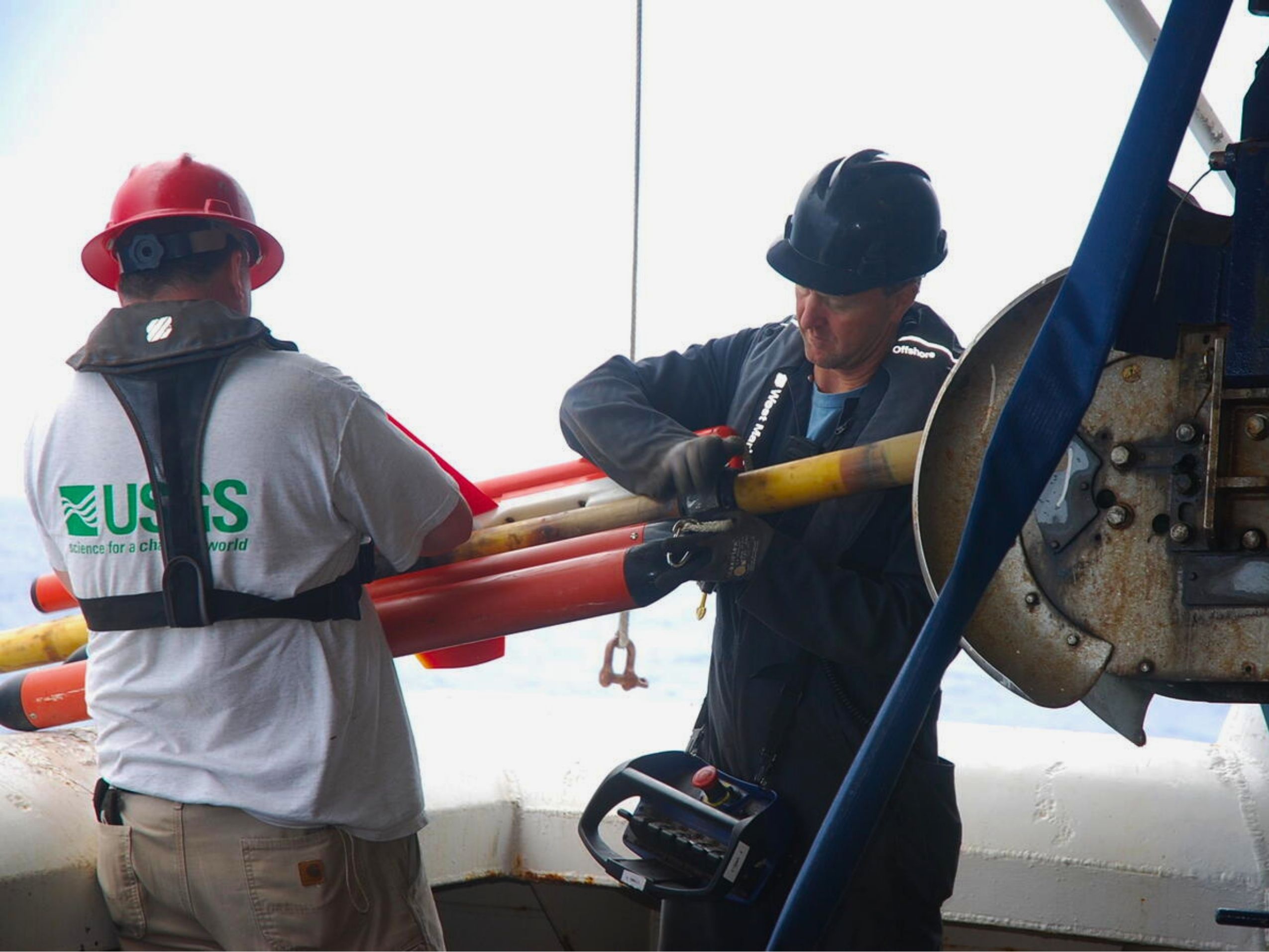
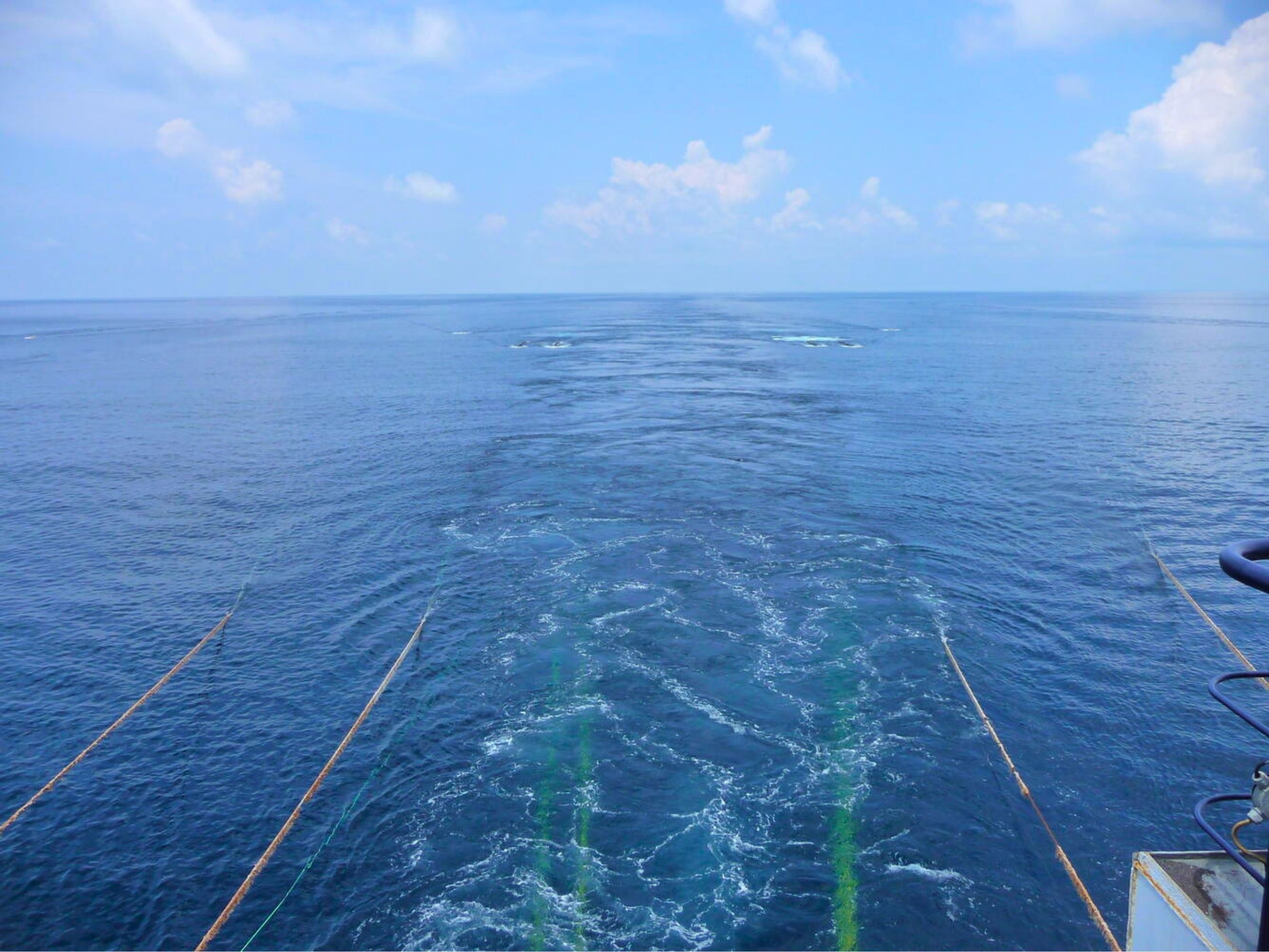
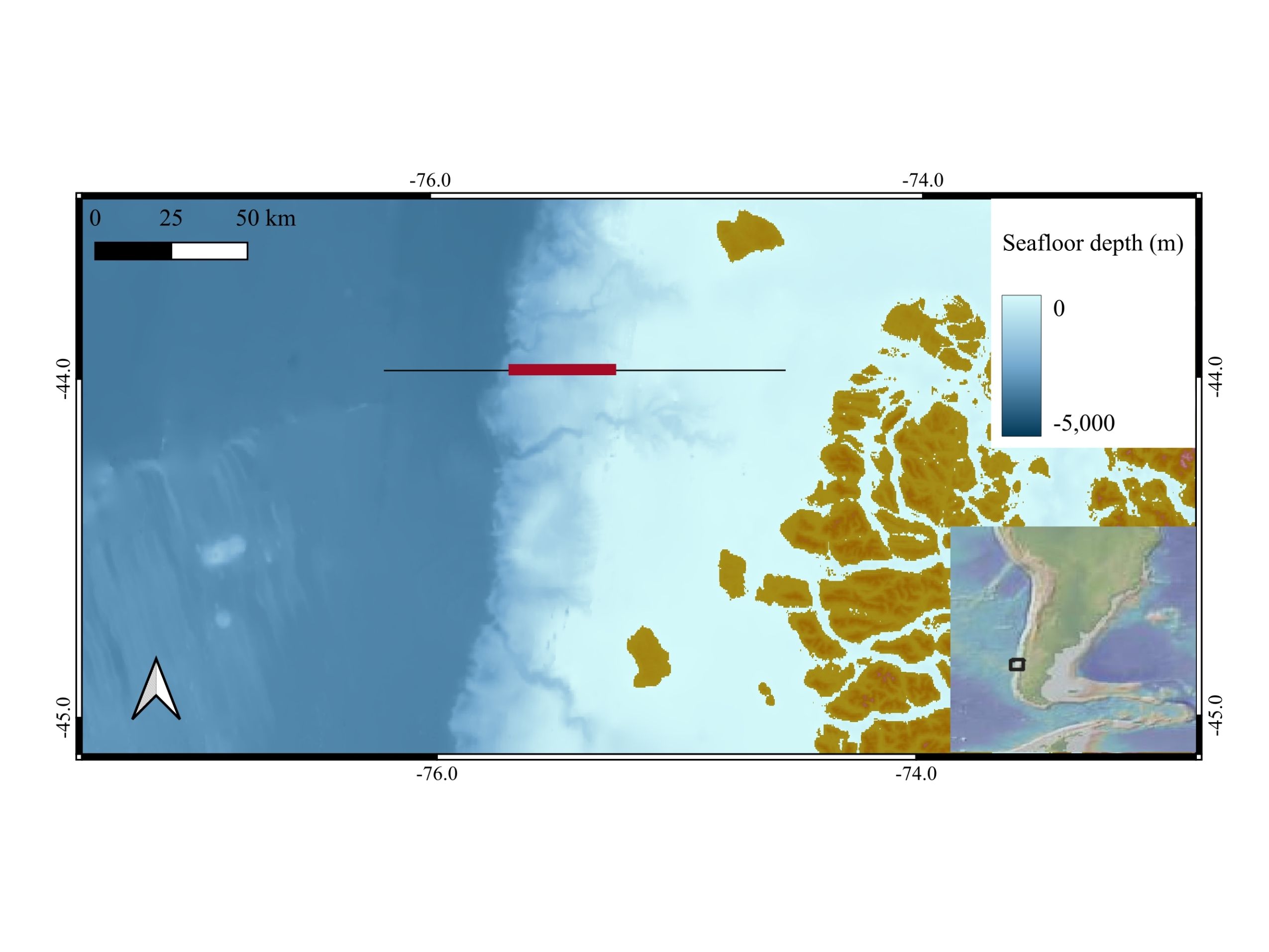
The study focuses on an area offshore from Coyhaique, in southern Chile, where seismic and bathymetric data show signs of positive seabed relief features that could be linked to processes typical of gas hydrate systems. The research analysed multichannel seismic reflection data, sub-bottom profiler data and multibeam bathymetric data, acquired during the MGL1701 oceanographic expedition. These were subsequently integrated with additional measured parameters.
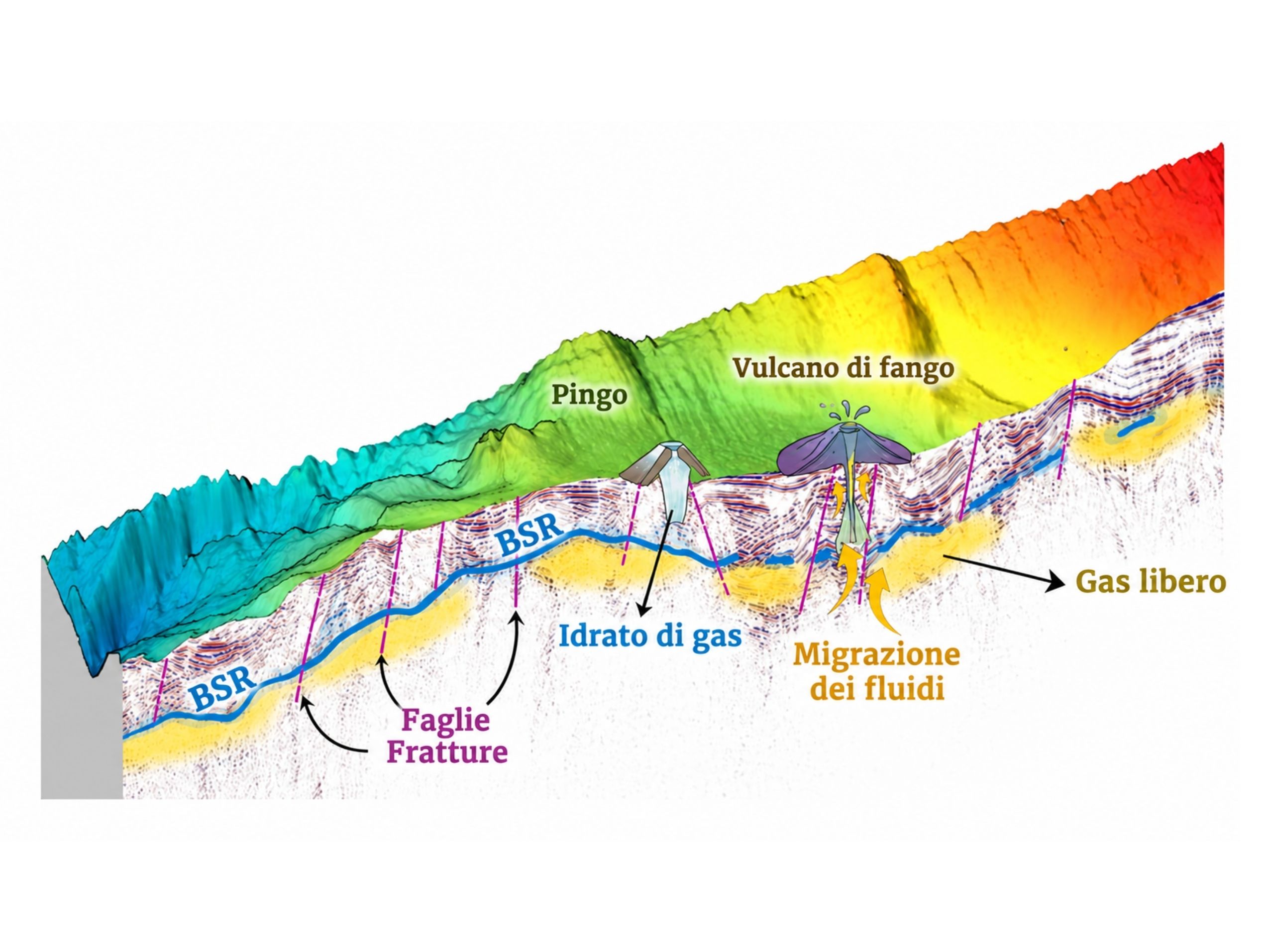
The results reveal five main seabed structures, as well as two additional buried structures along the seismic profile examined. One of the main structures was interpreted by the research team as a gas hydrate pingo, the first ever identified along the Chilean margin. This particular type of seabed feature is formed when expanding, pressurised gas and fluids accumulate in shallow sediments, causing the seafloor to rise. Should the pingo collapse as a result of hydrate dissociation, craters may be created and methane release may be facilitated.
The presence of pingos can be detected by a number of indicators, including a positive seabed relief feature, high seismic velocities, low sweetness values and relatively high concentrations of gas hydrates. Seismic velocity modelling is a valuable tool for estimating hydrate and free gas concentrations. This parameter is crucial for evaluating potential energy resources, assessing climate impacts, and identifying geological hazards, such as submarine landslides and the associated tsunamis.
The second structure identified at the site was interpreted by the research team as a mud volcano, based on its low seismic velocities and high sweetness attribute values. The same process can be used to identify the two buried structures. The remaining three main structures, however, cannot be classified with certainty.
Overall, these seabed features reveal the geological complexity of the area under investigation, which is characterised by significant fluid circulation associated with fractures and faults. Along the Chilean margin, tectonic deformation caused by the subduction of the Nazca Plate beneath the South American Plate, together with variations in heat flow, influences the formation and dissociation of gas hydrates.
The findings of this study, which expand our understanding of gas hydrate systems in southern Chile and highlight the need for further investigation, suggest that this gas system may be locally unstable, with potential implications for methane release and geological hazards. The results also underscore the need for long-term monitoring of the Chilean continental margin.
View also