30/09/2026
New article on the instability of the East Antarctic Ice Sheet in the Wilkes Basin published in Nature Reviews Earth & Environment
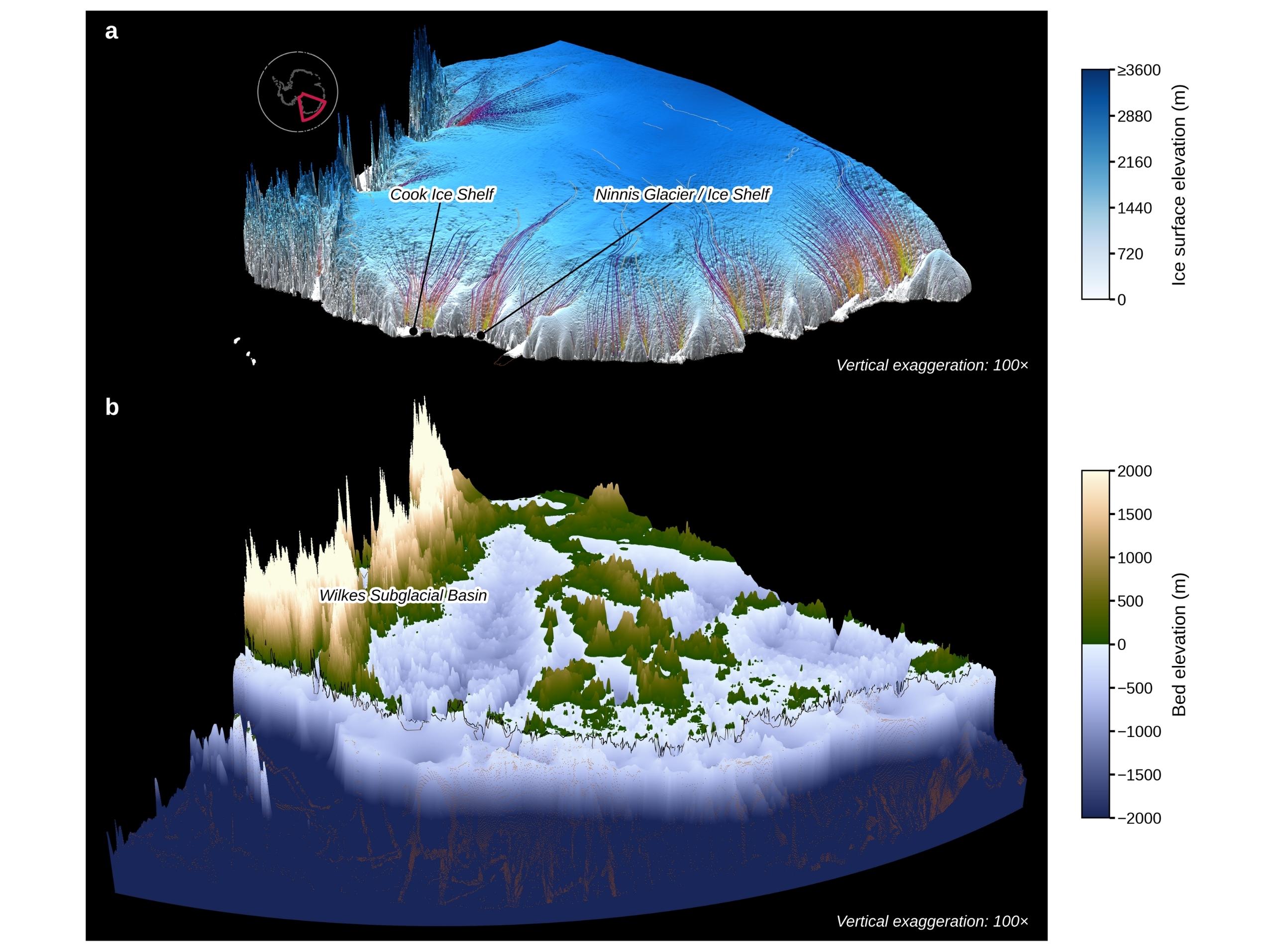
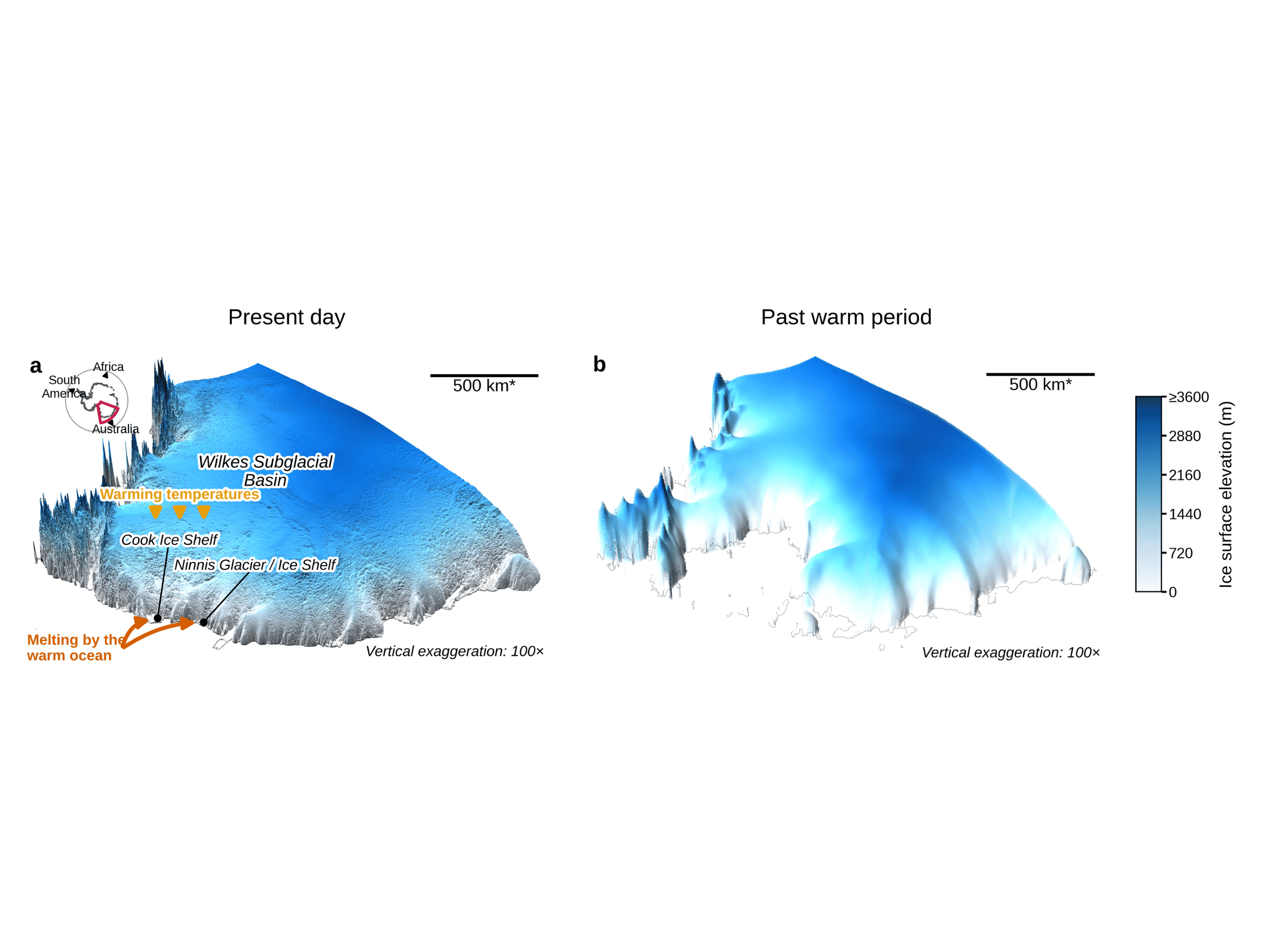
A new review article, published today in Nature Reviews Earth & Environment, calls for new globally coordinated interdisciplinary research campaigns in the Wilkes Subglacial Basin, one of the least studied regions of East Antarctica, but one that is particularly important because it could make a significant contribution to future global sea-level rise.
The study, led by Professor Matt King, Chief Investigator at the Australian Centre for Excellence in Antarctic Science (ACEAS) and a researcher at the University of Tasmania, also involved OGS researchers Fausto Ferraccioli, Florence Colleoni, Laura De Santis and Serena Lagorio, as well as Fiorenza Torricella, now a postdoctoral researcher at the University of Salamanca in Spain.
The review brings together findings from geology, oceanography and climate science, along with satellite observations and ice-sheet modelling, to establish the state of the art and better identify the most important scientific gaps that need to be addressed in relation to the Wilkes Basin. To date, no research vessel has ever come within 150 kilometres of the front of one of the region's main glaciers, Cook Glacier, while in situ mapping data of the seafloor and information on oceanographic conditions in the area remain extremely limited.
The international scientific community hypothesises that the bedrock beneath the basin, which deepens from the coast towards the interior of the continent and reaches depths of up to 2 km below sea level, could favour future ice-sheet retreat and potentially trigger instability, as is already occurring in West Antarctica. A substantial body of scientific evidence indicates that, in the past – for example, during the mid-Pliocene, around three million years ago – parts of the Wilkes Subglacial Basin appear to have experienced considerable retreat. These past scenarios represent a clear warning sign, therefore highlighting the urgent need to understand much better how this region will respond to future warming.
It is clear that no single nation can tackle this major logistical and scientific challenge alone, particularly at this crucial time leading up to the International Polar Year 2032–33, which is already being planned. A joint international effort is therefore required to investigate the region in greater detail. This is important to improve our ability to quantify and address sea-level rise, establish the impacts of climate change, and assess the consequences for coastal communities and vulnerable infrastructure in Australia, the Pacific and around the world.
View also