05/05/2026
Practicing Open Science in Trieste: the EMODnet Chemistry training course offered by OGS
On 28–29 April, the OGS organised a training course in Trieste on marine data management, in line with the principles of Open Science and in accordance with the standards of the European marine data access service, EMODnet Chemistry.
The OGS warmly thanks all participants in the invitation-only training course, organised by the OGS National Oceanographic Data Centre (NODC) as part of the EU-funded European Marine Observation and Data Network (EMODnet), project, the gateway to European in situ marine data.
The course was focused on EMODnet Chemistry, the component of EMODnet which, since 2009, has been collecting and validating data on eutrophication, ocean acidification and contaminants, including marine litter.
The partnership manages the heterogeneity, complexity, quality and high volume of in-situ measurements, generating and publishing standardised, harmonised and quality-controlled data, as well as reliable derived products, such as distribution and abundance maps of marine litter or hydrocarbons.
These are relevant for implementing European Union marine policies such as the Marine Strategy Framework Directive, the Water Framework Directive, and the Maritime Spatial Planning Directive. The current EMODnet Chemistry phase runs from 3 October 2025 to 2 October 2027; if renewed, the final end date is 30 June 2029.
EMODnet Chemistry brings together a core group of 14 partners and 27 subcontractors from 31 countries bordering the European seas, mostly national marine monitoring agencies and major marine research institutes, complemented by experts in information technology and marine data management. OGS has been confirmed as Project Coordinator and the Marine Information Service (MARIS, Netherlands) as Technical Coordinator. One international organisation is also involved: the International Council for the Exploration of the Sea (ICES). The Consortium is also supported by the expertise of the Regional Sea Conventions: OSPAR, HELCOM, BSC, and UNEP/MAP.
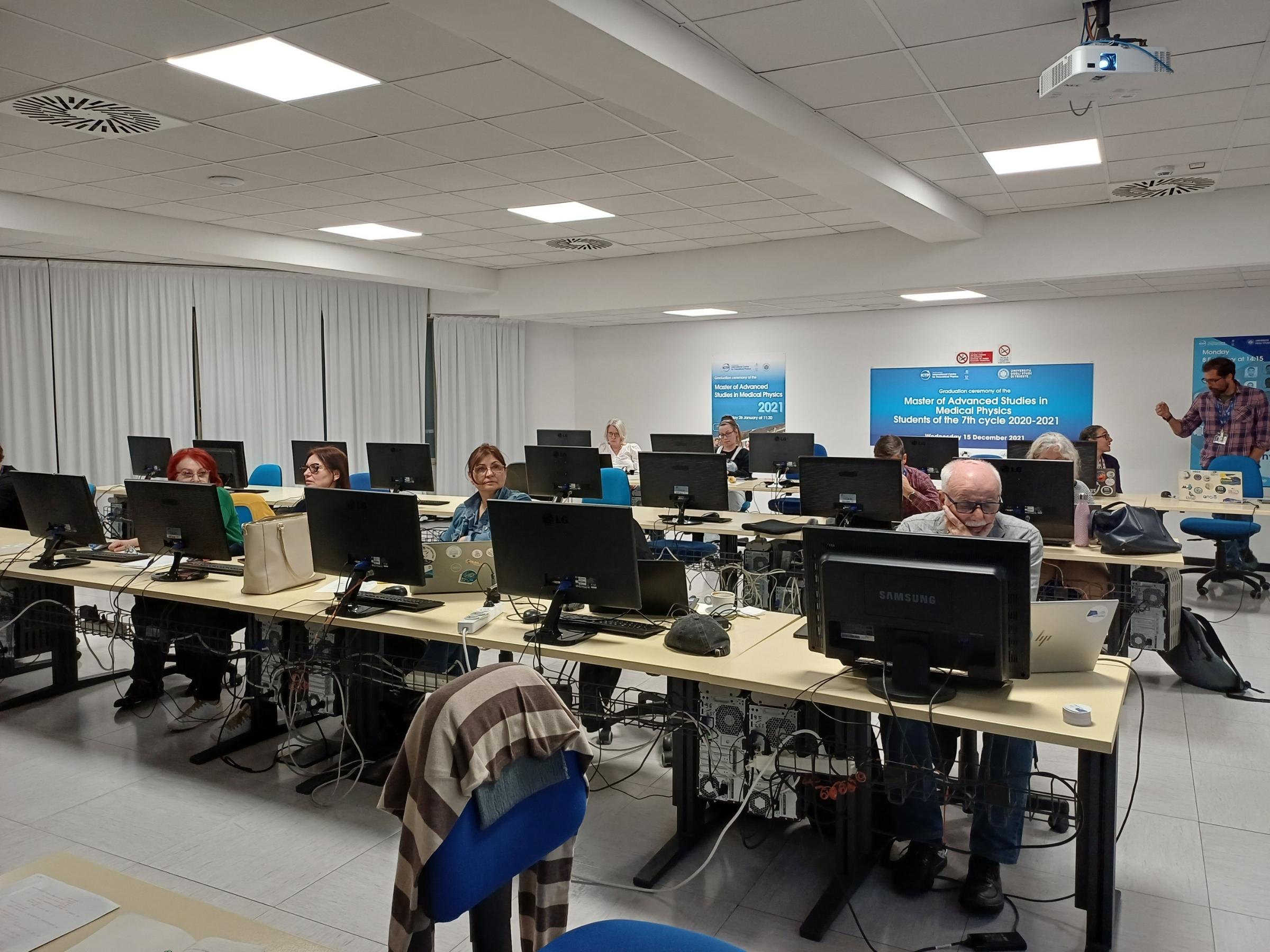
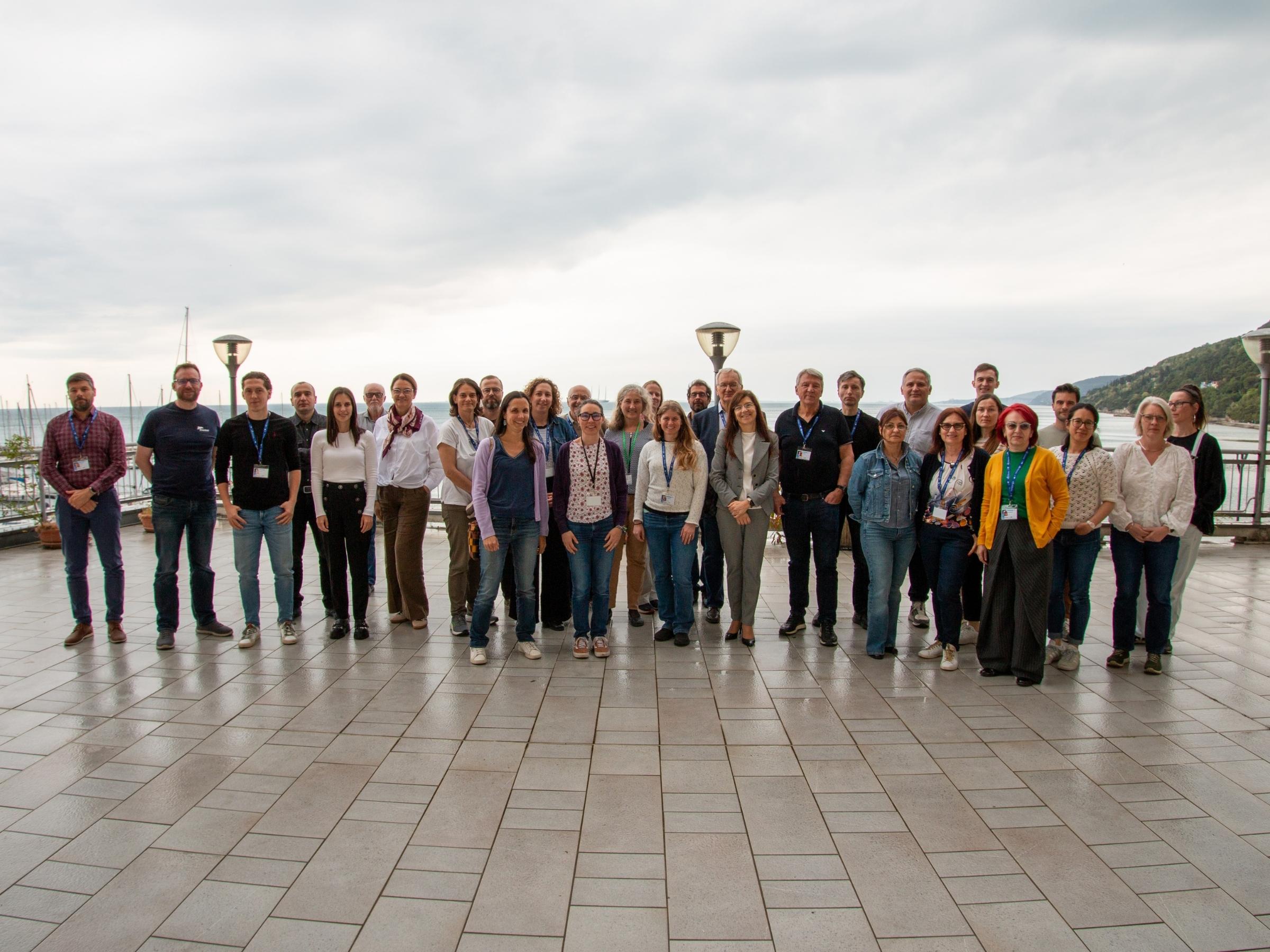
In its second edition, the training course aimed to explain how to manage all types of data to organisations with contractual obligations to provide data to EMODnet Chemistry. The event, held on 28 and 29 April, registered 55 participants from 25 countries. The majority (43) attended the course in Trieste at the International Centre for Theoretical Physics. The partnership was pleased to welcome a colleague from Ukraine, who could not attend in person in 2024 for security reasons.
The first day was led by OGS and six other key project partners from the United Kingdom, Sweden, Germany, the Netherlands, and France. It was dedicated to theoretical information on EMODnet Chemistry procedures, standards, and software, with a guided hands-on activity.
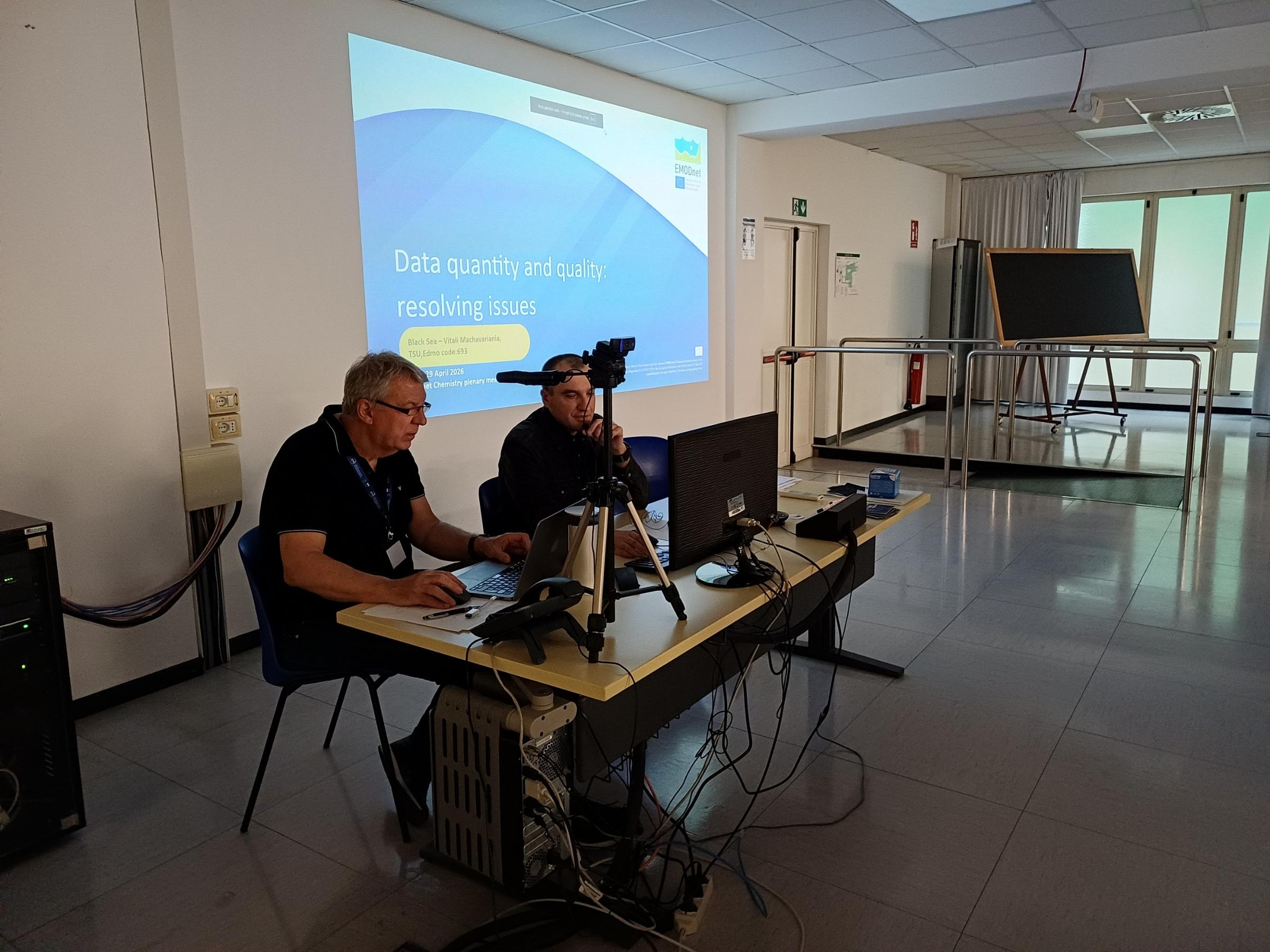
The second day focused on issues related to data population and data quality for each European sea region, and on assisting data providers experiencing difficulties in these areas. It was led by OGS, MARIS, and the regional coordinators (RCs) from Denmark, Norway, Sweden, Greece, France, and Romania. The RCs are responsible for producing aggregated, harmonised, and validated data collections in collaboration with the data providers.
EMODnet Chemistry relies on the SeaDataNet infrastructure, using its established standards, services, and tools to ensure high-quality marine data management across Europe. As dedicated support for SeaDataNet becomes more limited, initiatives such as these training courses are essential. Hands-on engagement with SeaDataNet tools, involving both new staff and experienced data stewards, directly strengthens data quality, increases harmonisation, and enhances the operational readiness of data centres supplying data to EMODnet Chemistry.
EMODnet Chemistry is currently developing an online version of the training course for a wider audience of data providers. For further information, please stay tuned.