16/02/2026
Climate change disrupts mediterranean seafloor ecosystems, threatening hundreds of species
Climate change is causing major shifts in the geographic distribution, diversity, and composition of benthic communities - species that live in close association with the seabed and are essential to the ecological balance of our seas.
These findings stem from a recent Italian-Swiss study led by OGS and published in the international journal Global Change Biology. The study, titled "The Geography of Mediterranean Benthic Communities Under Climate Change".
By employing species distribution models (SDMs), advanced biogeochemical and climate projections for the ocean, and a substantial database of over 100,000 occurrence records, researchers were able to assess the current and projected future distribution of approximately 350 benthic species in the Mediterranean over the coming decades.
Significant impacts are expected for these species, although these will not be uniform across regions. The results indicate that most of these organisms are likely to shift northward, mainly in response to rising water temperatures and decreasing levels of dissolved oxygen near the seabed. Distribution projections indicate a range of contraction scenarios, shifts in deep-water areas and an escalation in habitat fragmentation.
The greatest risks are posed to species that have adapted to cold thermal conditions. Conversely, species adapted to warmer conditions are projected to expand their ranges and migrate towards shallower waters.
These processes entail a significant increase in the risk of local extinction for benthic species, with major consequences for food webs and key marine processes such as bioturbation and nutrient cycling. To address these challenges, there is an urgent need for more ecosystem-based maritime spatial planning that accounts for the effects of climate change. This approach is essential to overcoming the limitations of traditional conservation strategies.
Questi processi comportano un aumento significativo del rischio di estinzione locale delle specie bentoniche, con ingenti danni per le reti trofiche e i processi chiave del mare, come la bioturbazione e il ciclo dei nutrienti. Serve dunque una pianificazione dello spazio marittimo sempre più basata sugli ecosistemi e attenta agli effetti del cambiamento climatico, così da superare i limiti legati alle strategie di conservazione tradizionali.
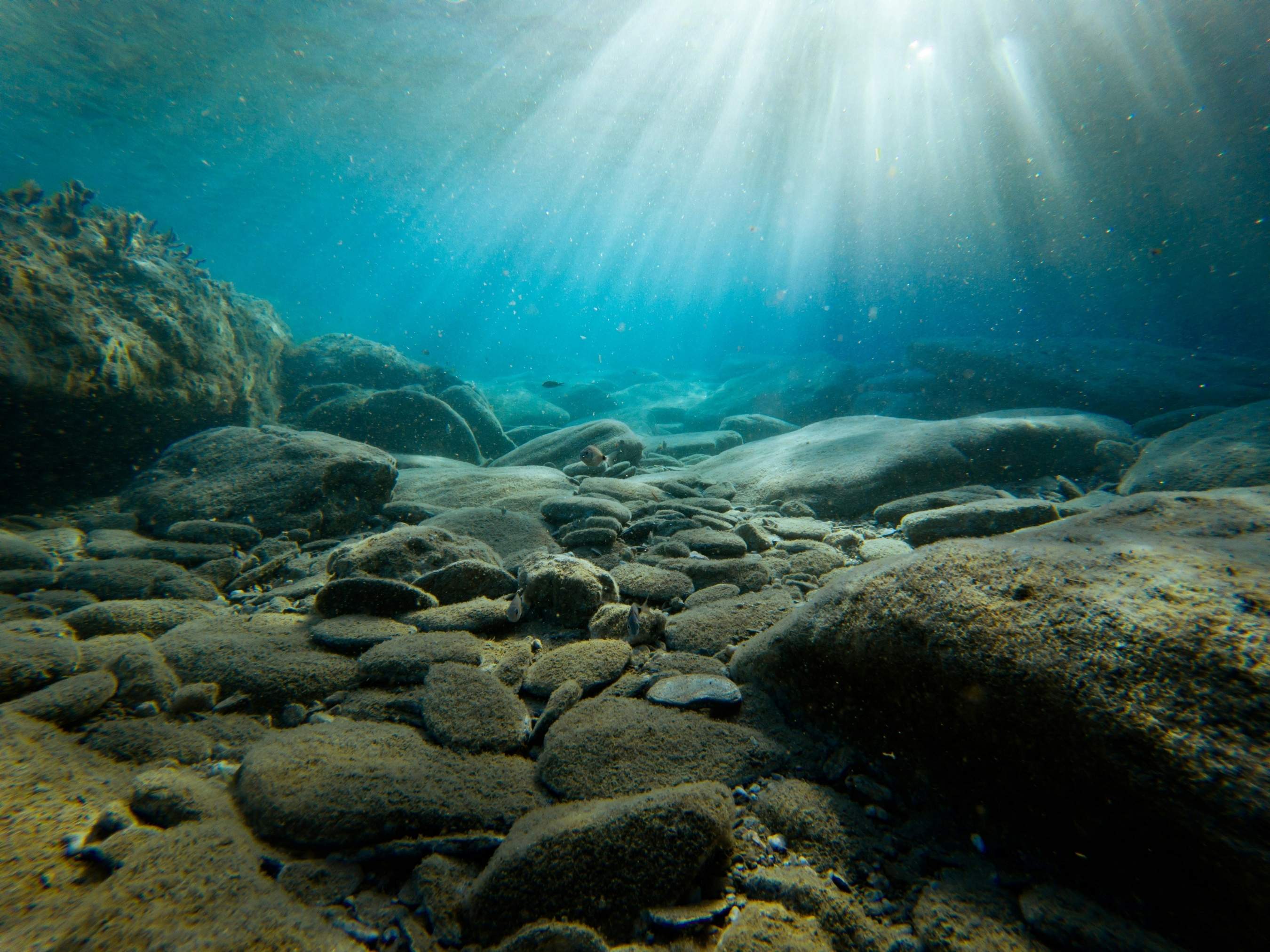
Photograph
Seafloor near Crete, Greece (Photograph by Yannis Papanastasopoulos, via Unsplash).
Vedi anche