
03/04/2026
Salinity is becoming increasingly important in regulating the circulation of the Mediterranean Sea
In the central Mediterranean, salinity significantly influences density, stratification, and numerous aspects of marine circulation. A new study conducted by a research group from the Oceanography Section of OGS examined the Adriatic Sea and the Ionian Sea, highlighting how, in a context of increasingly warmer oceans, processes related to salinity are becoming more and more important in determining surface circulation.
Ocean currents represent the great engine driving the distribution of heat and cold across our planet and play a fundamental role in climate regulation. They are mainly driven by surface winds and by variations in water density throughout the water column, the latter in turn determined by changes in temperature and salinity. In an era characterized by ocean warming, which leads to a decrease in the density of surface layers, salinity is taking on an increasingly crucial role in defining the structure of the water column and in modulating the variability of the so-called “ocean conveyor belt.”
The research, whose results were published in the scientific journal Environmental Research Communications, was carried out by combining different approaches: analyses performed using autonomous robots such as Argo floats and gliders, capable of measuring oceanographic parameters at various depths; satellite data to obtain information on surface-layer properties; and modeling analyses to fill observational gaps.
It was observed that starting from 2012, the dynamics of two major marine circulation systems in the central Mediterranean (two large vortices known as the North Ionian Gyre and the South Adriatic Gyre) have been modulated by the progressive salinification of surface layers. These dynamics manifest as changes in the periodicity and intensity of the natural alternation between cyclonic phases (when the vortex rotates counterclockwise) and anticyclonic phases (when it rotates clockwise). Over the past decade, these variations have been strongly influenced by the increase in salinity of the sea surface layer, a phenomenon further exacerbated by the progressive warming of Mediterranean waters.
The results of the study therefore highlight that understanding and monitoring changes in salinity — traditionally considered less relevant than wind forcing and sea-level gradients — is in fact essential for predicting the future evolution of circulation in the Mediterranean and at the global scale.
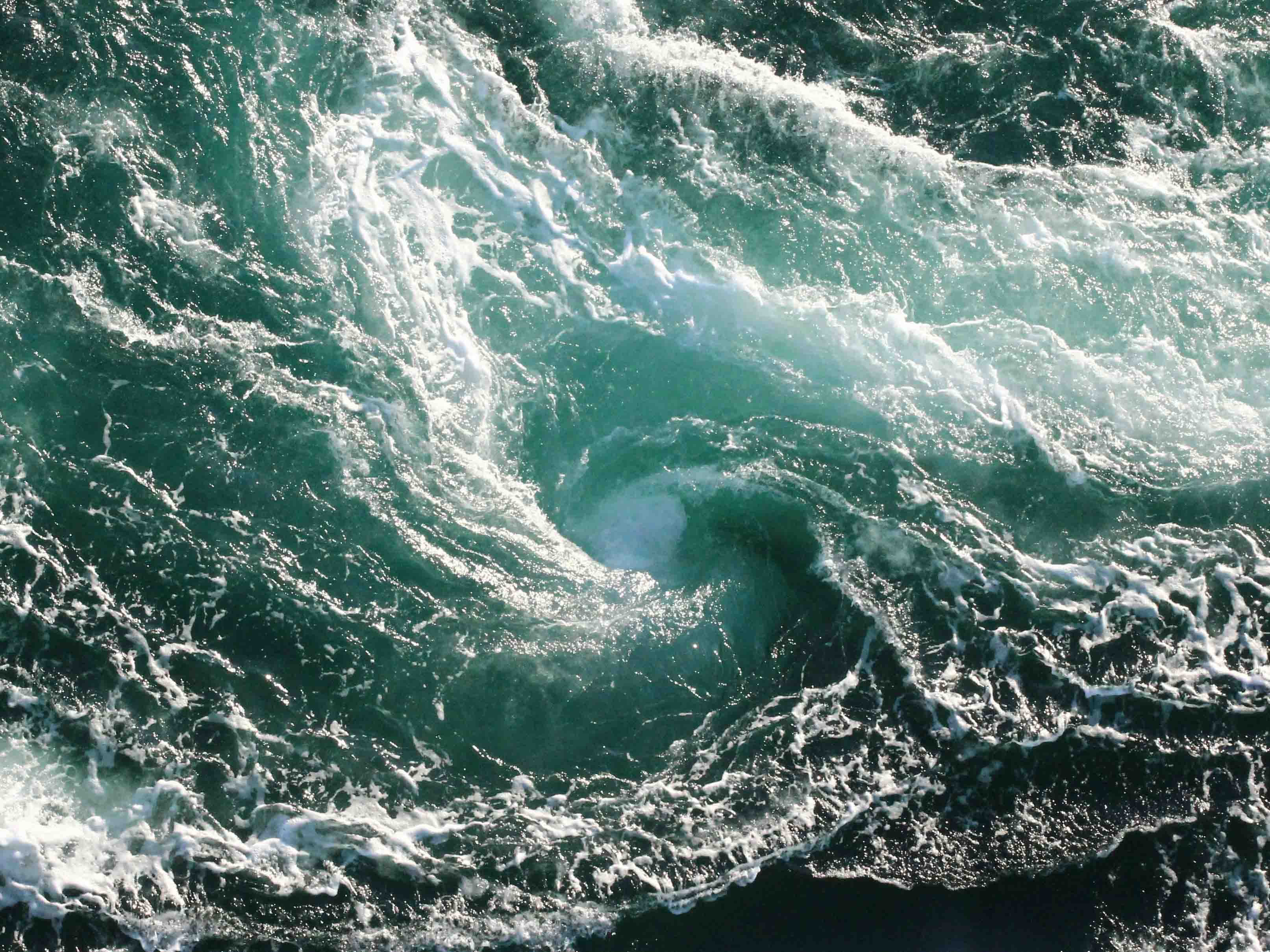
Photo credist: Arvid Høidahl / Unspash
Info