17/03/2026
The second year of joint experimentation between Arpa FVG and OGS is underway: new drifter releases to study the currents of the Gulf of Trieste
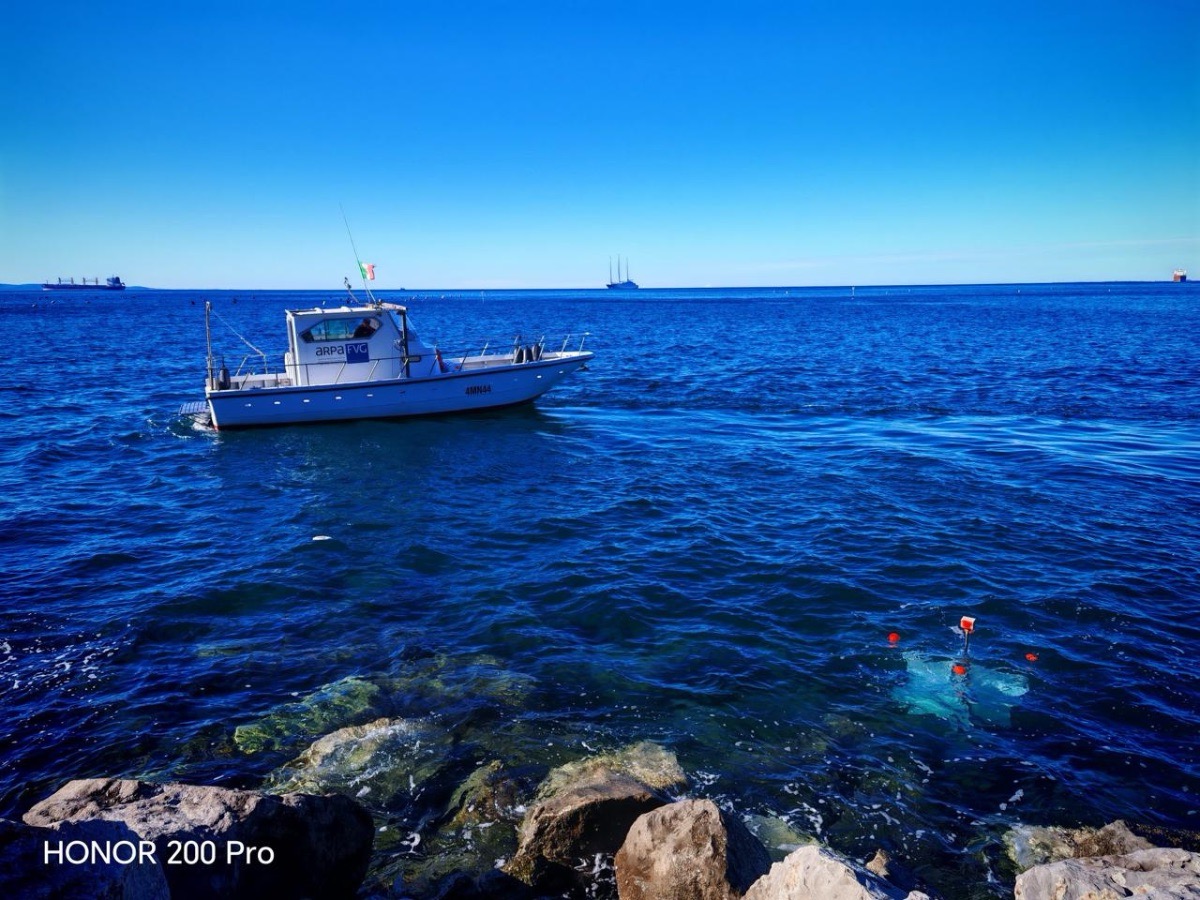
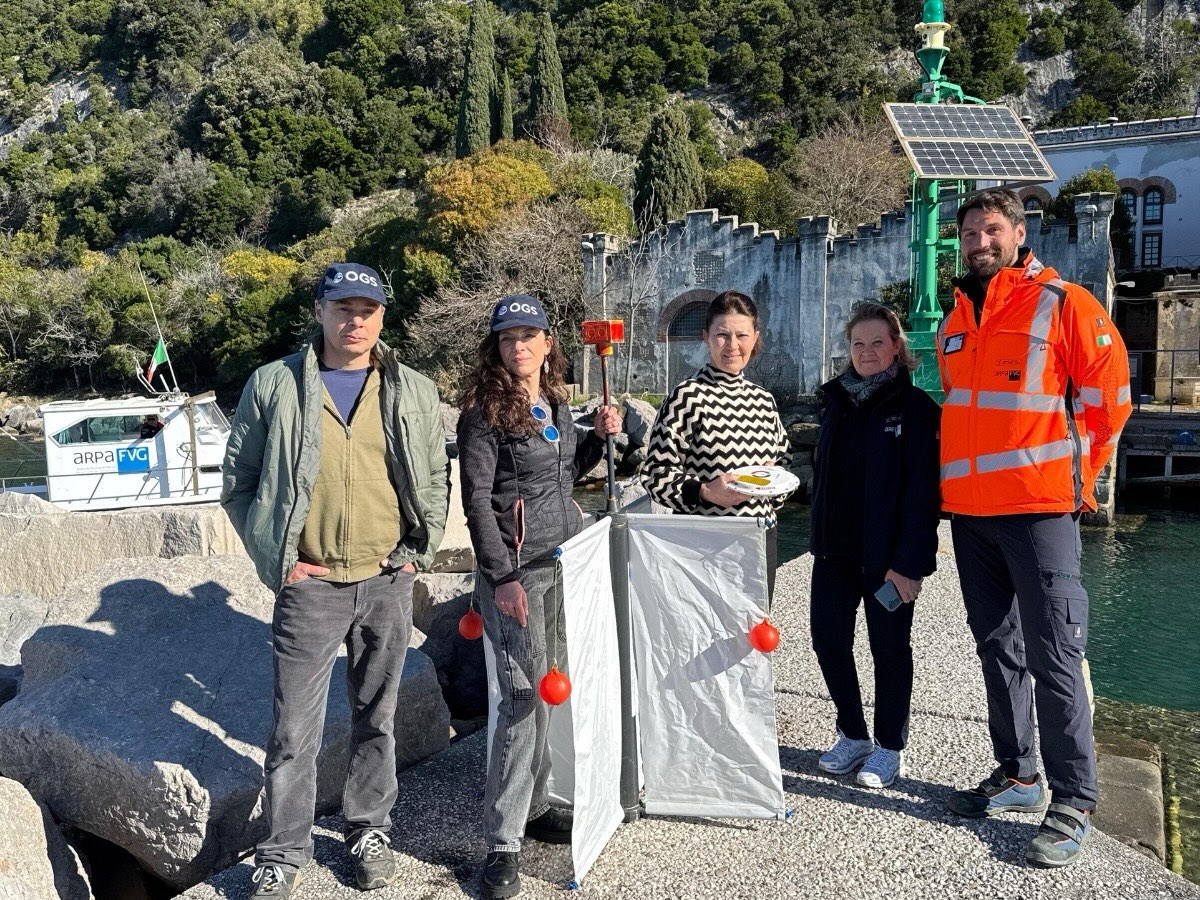
Starting again from the OGS headquarters in Aurisina, near the HF-RADAR station, the partnership between Arpa FVG – the Regional Agency for Environmental Protection of Friuli Venezia Giulia – and OGS resumes, focusing on the study of marine currents in the Gulf of Trieste through the release of drifters, passive satellite-tracked devices capable of following the movement of surface waters and marine currents.
After a first year that included five joint releases, the commitment of the two institutions to research applied to marine environmental protection and emergency management at sea is renewed.
Present at the launch of this second year of activities were the Director General of Arpa FVG, Anna Lutman, and the Director of the OGS Section of Oceanography, Cosimo Solidoro.
During 2025, five releases were carried out, each lasting 48 hours, under different weather and sea conditions, in order to analyze the behavior of the drifters under varying environmental factors. The collected data were compared both with the forecasting models developed by Arpa FVG and OGS, and with observations provided by the HF-RADAR systems installed in the Gulf of Trieste.
The analyses highlighted substantial differences between the dynamics of the two drifter models used:
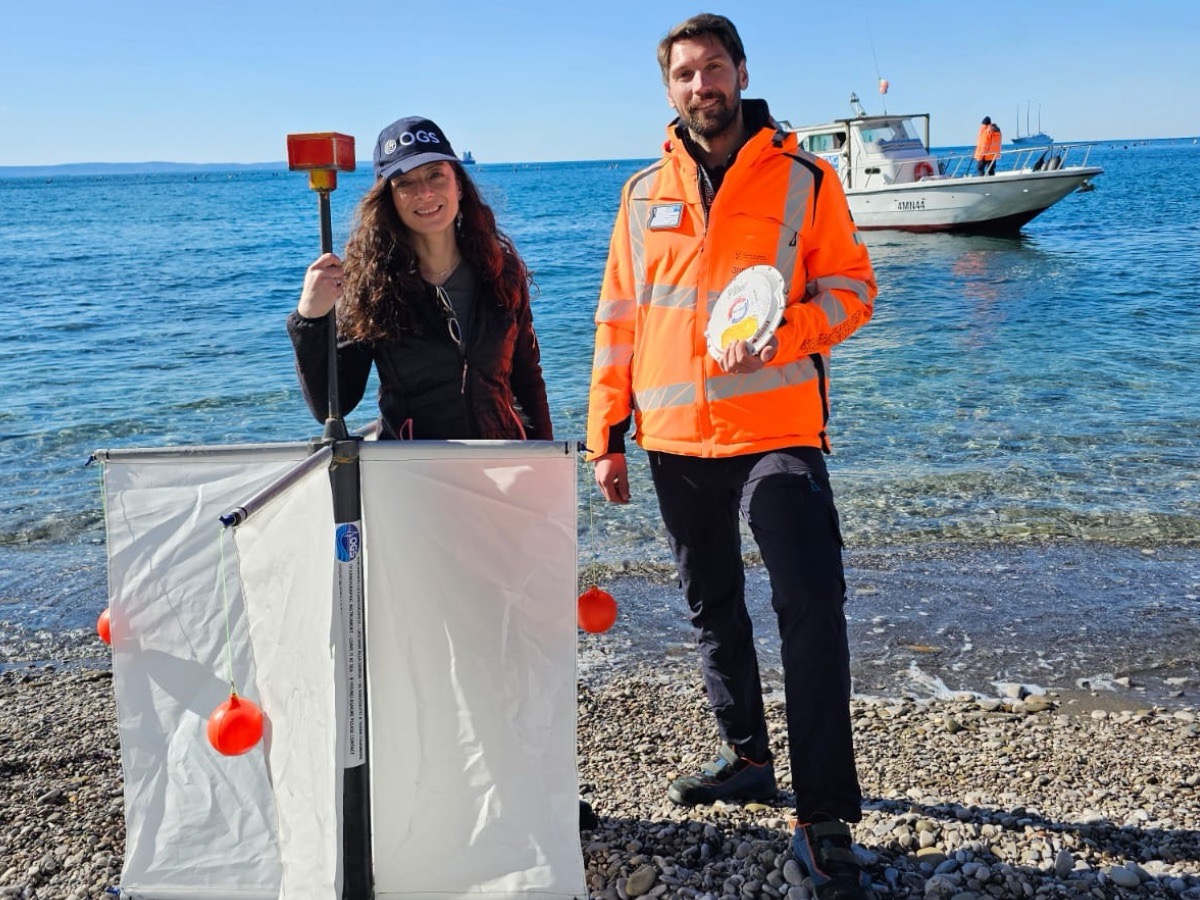
- the Code Drifter (cross-shaped structure with a sail) is more influenced by marine currents, while being less affected by wind and waves;
- the Stokes Drifter (disc-shaped structure), on the other hand, is driven simultaneously by currents, wind, and wave motion.
In general, already after the first 24 hours at sea, the Stokes model showed a different trajectory compared to the Code model, generally covering greater distances due to the stronger influence of wind and waves.
These differences demonstrate that the two instruments cannot be considered interchangeable, but rather complementary, each providing specific and valuable information for understanding the different components that govern the dynamics of surface waters in the Gulf.
To further clarify the causes of the observed divergences in trajectories, Arpa FVG and OGS have decided to continue the experimentation. Five additional releases are planned on a bimonthly basis, with activities scheduled to conclude by December 2026, in order to expand the dataset and further improve the validation capacity of numerical models.
The results of the first year of experimentation will be presented internationally at the scientific conference EGU General Assembly 2026 (EGU 26), dedicated to Earth and marine sciences, scheduled to take place in Vienna from May 3 to May 8, 2026.
The activity is part of a broader framework of monitoring and operational forecasting initiatives in the Northern Adriatic, with the aim of making tools increasingly effective in supporting the prevention and management of accidental spills of hydrocarbons or other pollutants, as well as improving the understanding of the physical processes governing the Gulf of Trieste.